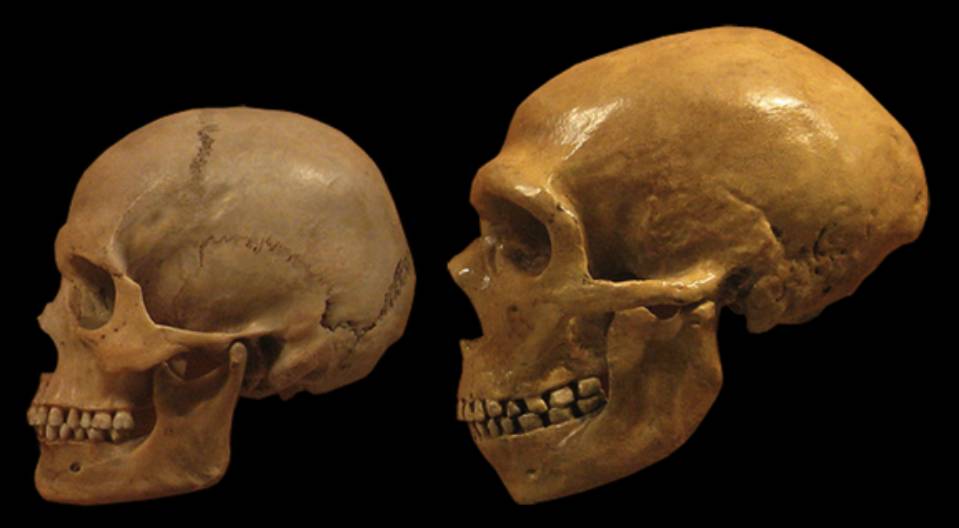
Modern industrialized societies are plagued by crowded, ill-aligned teeth. Braces, tooth extractions, and retainers are the bread and butter for all the dentists and orthodontists tasked with setting straight our dental deviations.
But as it turns out, our ancestors did not suffer from crooked teeth to the same extent that we do today. Our species’ fossil record reveals a telling story: the epidemic of crooked teeth developed in humans over time.
Evolutionary biologist, Daniel Lieberman, wrote in his book, The Story of the Human Body: ‘The museum I work in has thousands of ancient skulls from all over the world. Most of the skulls are filled with cavities and infections, the teeth are crowded into the jaw, and about one-quarter of them have impacted teeth. The skulls of preindustrial farmers are also riddled with cavities and painful-looking abscesses, but less than 5 percent of them have impacted wisdom teeth. In contrast, most of the hunter-gatherers had nearly perfect dental health. Apparently, orthodontists and dentists were rarely necessary in the Stone Age.’
Ample evidence abounds. The jaws of hunter-gatherers reveal roomy, perfect arches of well aligned teeth, with no impacted wisdom teeth.
So what’s happening to our mouths? The answer, as it turns out, is the size of our jaws.
For healthy development, jaws must be able to provide sufficient room for all of the thirty-two teeth that grow in the mouth. Over time, our teeth have grown crooked because our jaws have grown smaller and gradually altered ever since our ancestors began to use tools, cook, cease their mobile hunting-gathering lives and settled down to practice agriculture some 10,000 years ago.
Stone tools permitted a greater shift to a carnivorous diet because the ability to cut meat into small pieces reduced the amount of chewing required to extract nourishment. Less chewing reduced the need for large, powerful jaws.
The problem we face is that we have entered a space age world with Stone Age genes — genes that evolved to produce jaws adapted to a hunter-gatherer diet. Today’s jaws epidemic is concealed behind the commonplace. Its most obvious symptoms are oral and facial: crooked teeth (and the common use of braces), receding jaws, a smile that shows lots of gums, mouth breathing, and interrupted breathing during sleep.
Source: stanfordpress.typepad.com
Photo: hairymuseummatt (original photo), DrMikeBaxter (derivative work), Ephert (derivative work of derivative work), CC BY-SA 2.0, via Wikimedia Commons
