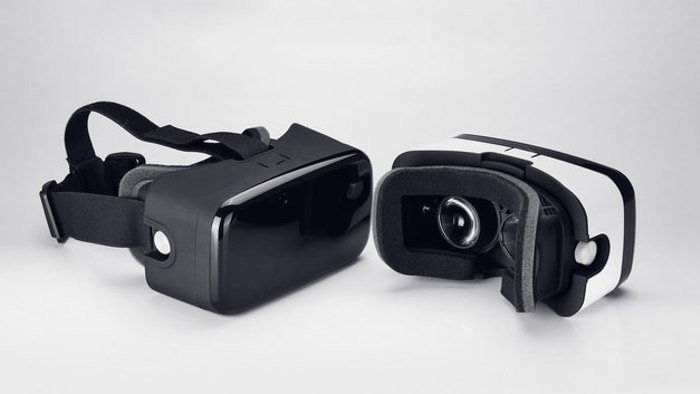
Imagine walking along a South Devon beach on a lovely day. The waves are lapping on the shore, rabbits are scurrying in the undergrowth, and the bells of the local church are mingling with the calls of the seagulls. Then, as you turn to continue along the coast path feeling calm and relaxed you suddenly hear your dentist say “Fine, all done, you can take the headset off now.” For patients at one dental practice in Devon, England, such Virtual Reality encounters are resulting in demonstrably better experiences in the dentist’s chair.
What the patient sees
The dental practice teamed up with researchers at the Universities of Plymouth, Exeter and Birmingham to find out whether VR could improve the patient’s experience during routine dental procedures, such as fillings and tooth extractions. Patients, who had agreed to take part in the study were randomly allocated to one of three conditions: a) normal dental practice without stimuli, b) a virtual walk around Wembury beach in Devon (using a headset and handheld controller), or c) a walk around an anonymous virtual reality city.
Results found that those who ‘walked’ around Wembury were less anxious, experienced less pain, and had more positive recollections of their treatment a week later, than those in the standard care condition. These benefits were not found for those who walked around the virtual city.
Dr. Karin Tanja-Dijkstra, the lead author of the study, said: “The use of virtual reality in health care settings is on the rise but we need more rigorous evidence of whether it actually improves patient experiences. Our research demonstrates that under the right conditions, this technology can be used to help both patients and practitioners.”
The Torrington Practice dentist involved in the research, Melissa Auvray, said: “The level of positive feedback we got from patients visiting Virtual Wembury was fantastic. Of course, as dentists we do our very best to make the patient feel as comfortable as possible but we are always on the look out for new ways to improve their experiences.”
The team are hoping to now investigate whether Virtual Wembury can help patients in other medical contexts and whether certain additions to the virtual environment could make the experience even better.
Source: www.sciencedaily.com