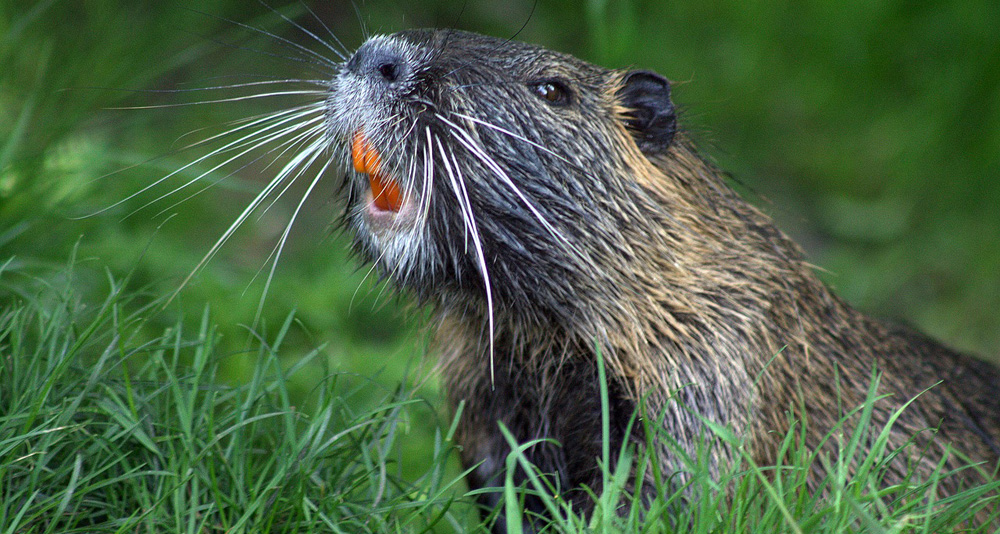
A new study has shown why beavers don’t suffer from tooth decay and the key appears to be a naturally built in chemical in the structure of their teeth that protects against cavities – in the form of iron.
It’s the iron that appears to make their enamel harder and more resistant to all the acidic substances and these findings could now help us to understand better how we can prevent tooth decay and make our teeth more resistant.
Enamel is composed of mineral ‘nanowires’ and Professor Derek Joester from the McCormick School of Engineering and Applied Science discovered the important role of unstructured material surrounding these ‘nanowires’, as these materials rich in minerals such as magnesium or iron are responsible for protecting our teeth and acid resistance.
‘The unstructured material, which makes up only a small fraction of enamel, likely plays a role in tooth decay,’ said Joester. ‘We found it is the minority ions – the ones that provide diversity – that really make the difference in protection. In regular enamel, it’s magnesium, and in the pigmented enamel of beaver and other rodents, it’s iron.’
A number of experiments were conducted on rabbits, mice and beavers allowing Joester and his team to image the newly discovered structure surrounding the nanowires. They used several powerful techniques to map the structure of the enamel and to learn what exposure to acids actually does to it. Among others, this experiment showed the difference between a beaver’s pigmented enamel rich in iron (iron gives the teeth a reddish-brown color) and regular enamel. The results showed that this pigmented enamel is an improvement even over fluoride-treated enamel in resisting acids.
Joester went on to say that as a beaver’s teeth are chemically different from our teeth he and his team are now hoping the discovery will help them to improve human enamel and make the current treatment with fluoride more effective.