Many of history’s most notable figures struggled with dental problems, leading to some fascinating stories about how their false teeth affected their lives, personalities, and even major historical events. Here’s a look at some of the most interesting cases of denture-wearing luminaries.
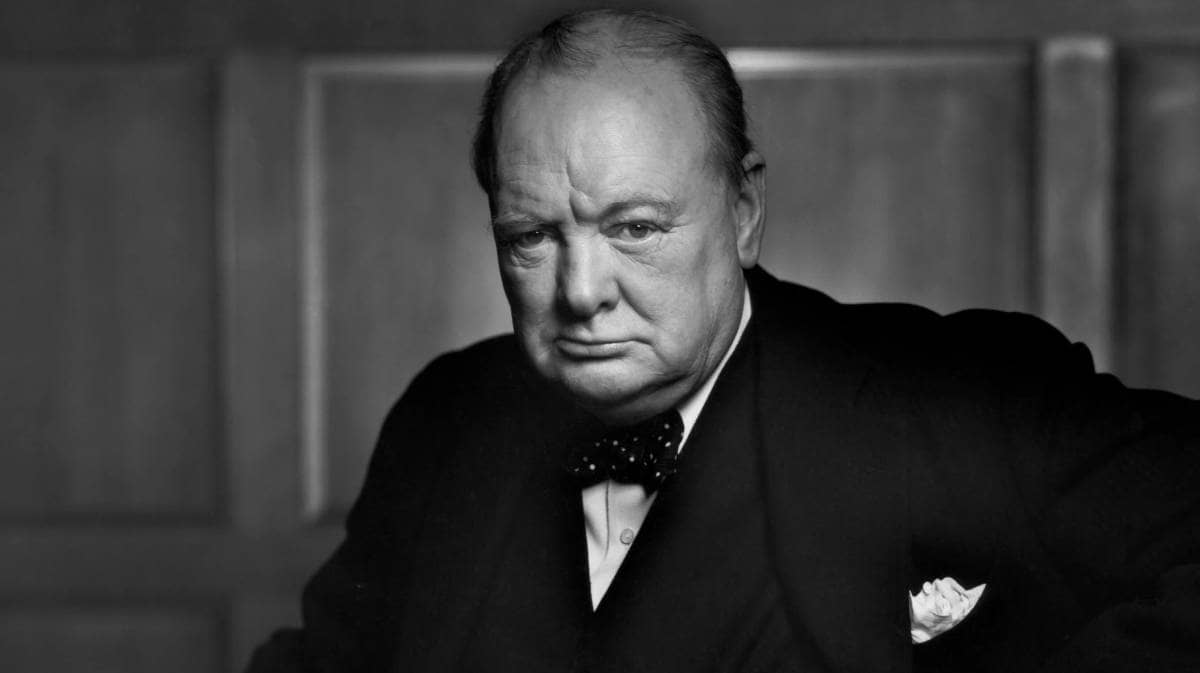
Winston Churchill
Churchill’s dentures played a crucial role in preserving his famous speech patterns. His original partial dentures were specifically designed with a slight gap to maintain his characteristic whistle when speaking. The dentures were so important to his wartime leadership that his dentist, Wilfred Fish, crafted four identical sets to ensure Churchill would never be without them. Fish, became so important to maintaining Churchill’s public image that he was classified as vital to the war effort.
Queen Victoria
Queen Victoria’s relationship with dentistry was particularly interesting. After losing several teeth, she began wearing dentures made of hippopotamus ivory. However, she was so self-conscious about them that she would often hold a handkerchief in front of her mouth while laughing – a habit that influenced Victorian etiquette, making it fashionable for ladies to cover their mouths when showing mirth.
Less known is that Victoria’s dentures were fitted with gold wire springs that sometimes squeaked during state functions. Her ladies-in-waiting learned to recognize when the queen needed to adjust her dentures and would create diversions to allow her to do so discretely.
George Washington
Contrary to popular belief, George Washington’s dentures weren’t made of wood. They were crafted from a range of materials including hippopotamus ivory, human teeth (some purchased from his own slaves), lead, brass screws and even gold wire. The discomfort from his ill-fitting dentures actually changed his facial appearance over time, contributing to the stern expression seen in his portraits.
His dentures were spring-loaded and needed to be held closed by constantly clenching his jaw. This made public speaking particularly challenging. The dentures would often make clicking sounds during meals, causing Washington to eat in private when possible.
Catherine the Great
The Russian Empress suffered terribly from dental problems and commissioned a team of European craftsmen to create what might have been the first set of porcelain dentures in Russia. Her dentures were so uncomfortable that she developed a habit of constantly tapping her fan against her chin – a gesture that became fashionable among Russian court ladies who had no idea they were mimicking their empress’s dental discomfort.
Benjamin Franklin
Franklin documented the creation of his own dentures, experimenting with different materials and designs. He noticed that his false teeth changed color depending on what he ate and drank, leading him to study dental staining. This research contributed to early developments in dental materials science.
Napoleon Bonaparte
Napoleon’s dental problems were surprisingly influential in his military campaigns. His personal dentist, Jean-Joseph Dubois-Foucou, created several sets of dentures for the emperor using gold wire and human teeth (some allegedly taken from soldiers who died in battle). During the disastrous Russian campaign of 1812, Napoleon suffered from severe toothache and gum infections that affected his ability to concentrate on military strategy.
Interestingly, some historians suggest that Napoleon’s habit of holding his hand against his cheek in portraits – long thought to be a pose of contemplation – may have actually been to ease his dental pain. His dental problems got so bad during his exile on Saint Helena that he refused to appear in public, contributing to his isolation in his final years.