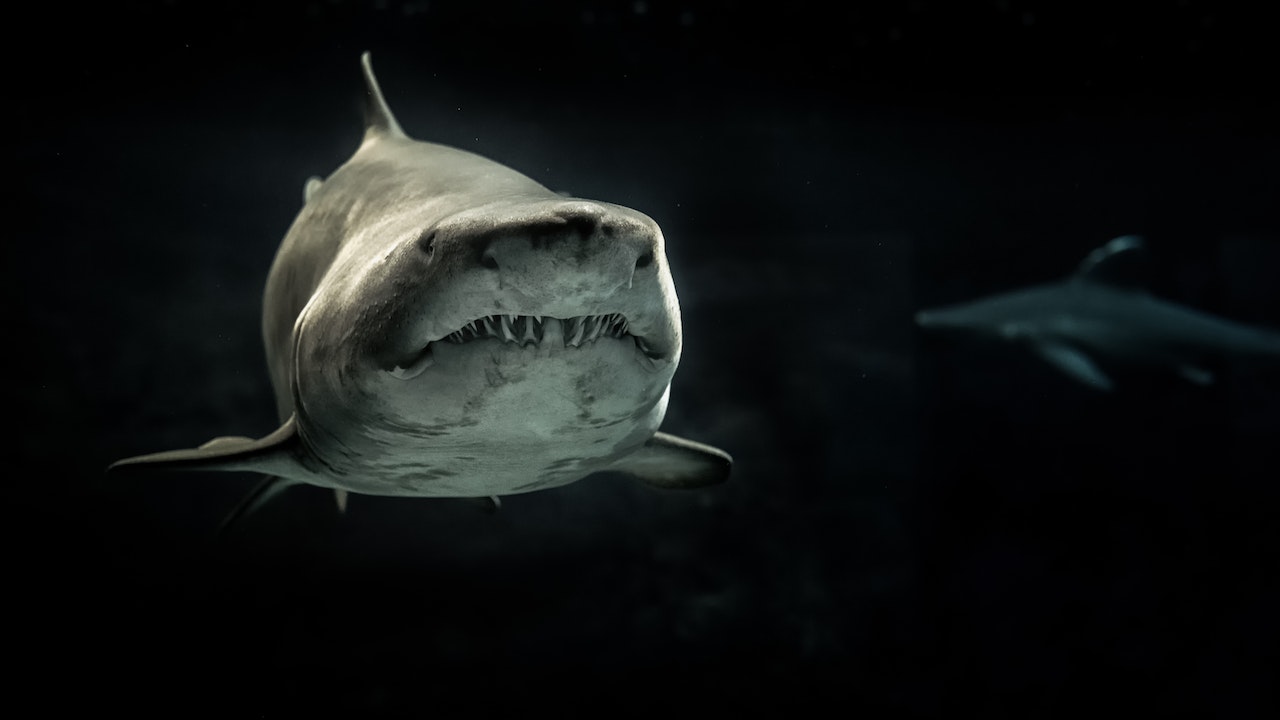
A new study published in the Journal of Structural Biology, has revealed that shark teeth contain fluoride, the active ingredient in most toothpastes and never suffer from cavities.
While shark teeth contain fluoroapatite (fluorinated calcium phosphate), human and other mammalian teeth contain hydroxyapatite, an inorganic constituent also found in bone, explained co-author Matthias Epple.
“In order to make teeth more acid resistant, toothpaste often contains fluoride,” Epple, a professor of inorganic chemistry at the University of Duisburg-Essen, told Discovery News. “In the surface of human teeth after brushing, a small amount — much less than 1 percent — of hydroxide is exchanged by fluoride.”
“In contrast,” he added, “(the surface of) shark teeth contains 100 percent fluoride. In principle, sharks should not suffer from caries. As they live in water and as they change their teeth regularly, dental protection should not be a problem for sharks.”
The study used a multitude of high-tech investigative techniques, including scanning electron micrographs, to look at the teeth of two different sharks: the shortfin mako (Isurus oxyrinchus) and the tiger shark (Galeocerdo cuvier). These sharks were chosen for their distinct eating habits. Tiger sharks cut flesh, whereas shortfin makos tear it.
Despite these differences, the chemical and crystalline composition of the teeth of both sharks was discovered to be similar. The interior of shark teeth, in addition to the highly mineralized enamel exterior, was discovered to contain a soft material known as “dentin,” which contains more protein and is more elastic. Dentin is also found in human teeth.
Mechanical measurements and micro and nano-scale tests revealed that shark teeth are not harder than human teeth.
“This finding is surprising because the mineral fluoroapatite is harder than the mineral hydroxyapatite, so if a tooth was made entirely of the mineral, a shark tooth would be harder than a human tooth,” Epple explained. “It appears that the special arrangement of the enamel crystals and the protein matrix compensates for the less hard mineral, and the human tooth ends up being as hard as a shark tooth.”
Sharks have the unique ability to replace their teeth several times during their lives, in addition to their unique tooth structure. This is not due to cavities, but rather to their teeth becoming stuck in prey or being forced out in other ways.
Source: nbcnews.com

